Compulsive Licking in Senior Dogs: Causes, Solutions, and When to Worry

Fact checked by: Nicole Etolen

Updated On:

Compulsive Licking in Senior Dogs: Causes, Solutions, and When to Worry
SeniorPups is your trusted resource for everything related to caring for aging dogs. Our mission is to help senior pups live their golden years to the fullest by offering expert-backed advice, practical tips, and heartfelt support. Whether you’re managing age-related health issues or just want to make your dog’s life a little more comfortable, we’re here to guide you every step of the way. Ask ChatGPT

Table of Contents

🐾 TL;DR: Compulsive Licking in Senior Dogs

🧠 Quick Take:
Excessive licking in older dogs is often a sign of something deeper—like joint pain, anxiety, skin irritation, or cognitive changes. It’s common, but it’s not something to ignore.

Why You Should Keep Reading:
We’ll break down the most common causes of compulsive licking in senior dogs, what you can do at home to help, when calming aids may be useful, and how to tell when it’s time to call the vet.

🦴 Common Causes
Arthritis, chronic pain, anxiety, allergies, boredom, or age-related cognitive changes.
🌿 Helpful Support
Comfort-focused routines, joint support, skin care, enrichment, and calming tools like sprays or chews can help reduce the behavior.
🚩 When to Worry
Open sores, sudden intense licking, limping, hair loss, or behavior changes mean it’s time to check in with your vet.

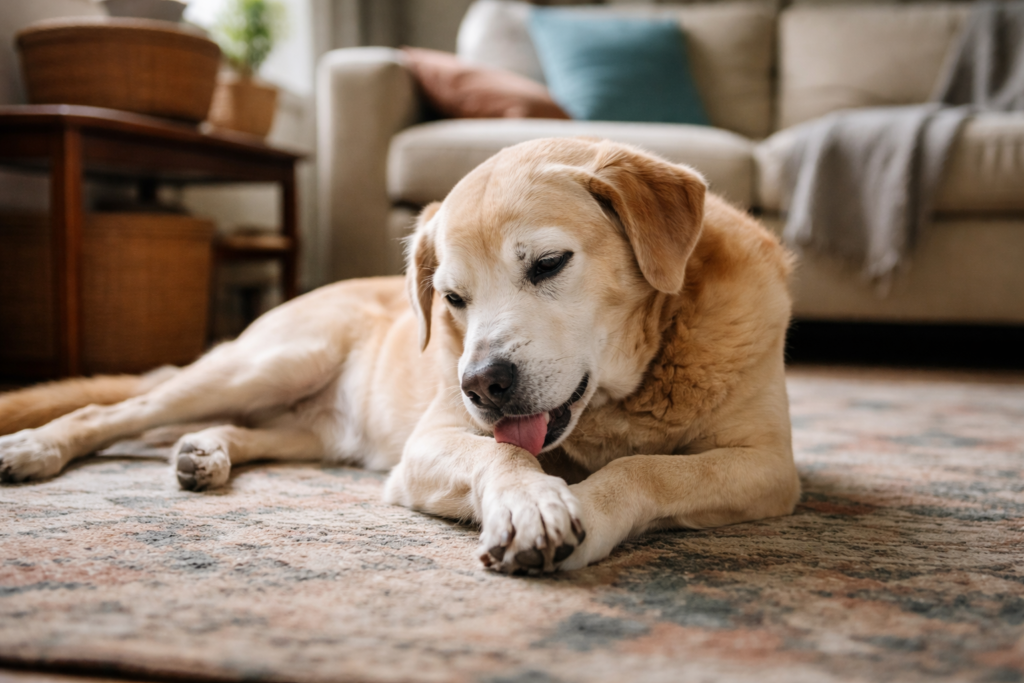
If your senior dog has suddenly decided that their paws, the couch, or one oddly specific spot on the floor absolutely must be licked at all times… you’re not alone. Compulsive licking is one of those behaviors that sneaks up on a lot of dog parents as their pups get older, and it can be confusing, frustrating, and honestly a little concerning to watch.

The tricky part is that licking isn’t automatically a problem. Dogs lick for a lot of normal reasons. But when it becomes excessive, repetitive, or hard to interrupt, it’s usually your dog trying to tell you something.

Let’s break down what’s actually going on, what’s normal versus not, and what you can realistically do to help.

What Counts as “Compulsive” Licking?

A little licking here and there is normal. Dogs lick to groom, to self-soothe, and sometimes because… well, dogs are weird.

Compulsive licking tends to look different. You might notice:

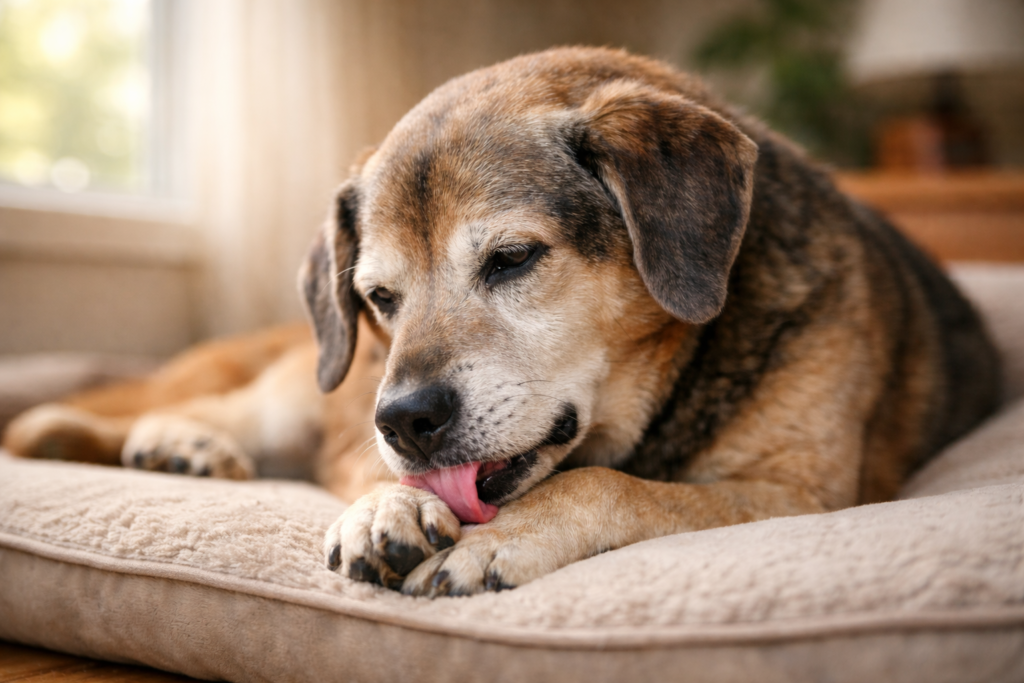
  • Repeated licking of the same spot (often paws, legs, or joints)

  • Licking that happens during rest periods rather than grooming time

  • Difficulty redirecting them once they start

  • Licking that leads to hair loss, redness, sores, or thickened skin

  • Licking that seems tied to stress, boredom, or discomfort

In senior dogs especially, this behavior often has more than one cause layered together.

Common Causes of Compulsive Licking in Senior Dogs

Compulsive Licking in Senior Dogs: Causes, Solutions, and When to Worry

1. Arthritis and Chronic Pain

This is one of the biggest culprits in older dogs.

As joints stiffen and inflammation increases, dogs may lick areas that hurt. Paws, elbows, hips, and wrists are common targets. The licking itself releases endorphins, which can temporarily dull pain (kind of like a dog version of rubbing a sore muscle).

The challenge is that pain-related licking doesn’t always happen right at the joint. A dog with hip pain might obsessively lick a paw or leg because the sensation radiates or because movement triggers discomfort elsewhere.

What to look for:

  • Stiffness after naps

  • Slower movement on stairs

  • Reluctance to jump

  • Licking focused on joints or limbs

2. Cognitive Decline (Doggy Dementia)

Canine Cognitive Dysfunction (CCD) is more common than many people realize. As dogs age, changes in brain chemistry can lead to repetitive behaviors, including compulsive licking.

This kind of licking often looks… absent-minded. Almost trance-like. Your dog may lick floors, furniture, or even the air, especially in the evening hours (sundowning is a thing for dogs, too).

Signs this may be cognitive:

  • New repetitive behaviors appearing later in life

  • Confusion or disorientation

  • Changes in sleep patterns

  • Staring at walls or getting “stuck” in corners

3. Anxiety and Stress (Yes, Even in Older Dogs)

Senior dogs can become more anxious, not less. Changes in routine, vision or hearing loss, new pets, household stress, or even subtle environmental changes can all trigger anxiety.

Licking is self-soothing. Think of it like a nervous habit. When anxiety goes unaddressed, licking can become compulsive pretty quickly.

This is where calming tools, including environmental changes and gentle calming products, can be surprisingly helpful.

4. Skin Issues and Allergies

Dry skin, allergies, and thinning fur are common in aging dogs. Seasonal allergies don’t magically disappear with age, and food sensitivities can develop later in life, too.

Older skin is also slower to heal, so a small itch can turn into a long-term licking habit fast.

Check for:

  • Redness or inflammation between toes

  • Flaky or dry skin

  • Hot spots or sores

  • Licking that worsens seasonally

5. Boredom and Reduced Mental Stimulation

Senior dogs may slow down physically, but their brains still need engagement. When walks get shorter and playtime decreases, licking can become a default activity.

This is especially common in dogs who were previously very active or working breeds that suddenly have fewer outlets.

How to Help: Practical Solutions That Actually Work

Address Pain First

If you suspect pain, start there. Even mild arthritis can trigger licking.

  • Supportive joint supplements

  • Comfortable, pressure-relieving beds

  • Short, frequent walks instead of long ones

  • Gentle massage or heat therapy (if tolerated)

Pain management alone can significantly reduce compulsive licking in some dogs.

Calm the Nervous System

If anxiety or restlessness seems to be part of the picture, calming tools can make a noticeable difference.

This is where calming sprays, CBD chews, and similar products fit in naturally. They’re not magic fixes, but they can help take the edge off so your dog can actually relax.

  • Calming sprays (often lavender or pheromone-based) can be used on bedding or favorite resting spots

  • CBD chews may help with both anxiety and mild discomfort, which is why they’re often helpful for seniors

  • L-theanine or chamomile-based supplements can support relaxation without sedation

These tend to work best as part of a routine, not as one-off fixes.

Improve Skin Comfort

If skin irritation is involved, reducing itchiness can break the lick cycle.

The goal is to remove the physical trigger so the habit doesn’t keep reinforcing itself.

Add Mental Stimulation (Without Overdoing It)

Mental enrichment doesn’t have to mean intense activity.

  • Snuffle mats

  • Lick mats with safe, soft foods (ironically helpful when directed licking replaces compulsive licking)

  • Gentle puzzle toys

  • Short training refreshers or scent games

These give your dog something to do instead of defaulting to repetitive behaviors.

Create a Predictable, Low-Stress Routine

Senior dogs thrive on predictability.

  • Consistent feeding and walking times

  • Calm evenings with dim lighting

  • Familiar sleeping spots

  • Gentle transitions between activities

Routine reduces anxiety, and less anxiety often means less licking.

When Compulsive Licking Becomes a Red Flag

Some situations really do warrant a vet visit sooner rather than later.

Call your vet if you notice:

  • Open sores or wounds from licking

  • Sudden onset of intense licking

  • Licking paired with limping, crying, or behavioral changes

  • Hair loss or thickened skin at the licking site

  • Signs of cognitive decline worsening rapidly

Compulsive licking can sometimes signal underlying conditions like nerve pain, endocrine disorders, or advanced arthritis that need medical intervention.

Takeaway

Compulsive licking in senior dogs is rarely random. It’s usually a mix of pain, anxiety, skin discomfort, cognitive changes, or boredom (often more than one at the same time).

With the right mix of pain support, calming strategies, gentle enrichment, and sometimes supportive products like calming sprays or CBD chews, many dogs show noticeable improvement.

And when in doubt? Trust your instincts. You know your dog. If something feels off, it probably is—and getting help early can make a world of difference in your dog’s comfort and quality of life.


You may also like.