
Dog Hearing Aids: New Tech That Helps Senior Dogs Stay Connected

Fact checked by: Nicole Etolen

Updated On:

Dog Hearing Aids
SeniorPups is your trusted resource for everything related to caring for aging dogs. Our mission is to help senior pups live their golden years to the fullest by offering expert-backed advice, practical tips, and heartfelt support. Whether you’re managing age-related health issues or just want to make your dog’s life a little more comfortable, we’re here to guide you every step of the way. Ask ChatGPT

Table of Contents

As our dogs age, their hearing often fades—but their desire to stay connected with us doesn’t. If your pup seems more “in their own world” lately, it might not be stubbornness. It could be hearing loss.

Thankfully, new tech like dog hearing aids and vibration collars is making it easier than ever for senior dogs to stay tuned into the world they love.

Let’s explore the smartest tools out there—and how you can help your dog feel less lost and more loved.

🦻 TL;DR: Helping Senior Dogs Hear the World Again

🧠 Quick Take:
Senior dogs often lose hearing, but that doesn’t mean they have to lose connection. New tools—from hearing amplifiers to light-based cues—can help your aging pup stay aware, responsive, and safe.

Why You Should Keep Reading:
Discover the top tech picks, training tricks, and expert insights that are changing how we care for hard-of-hearing dogs. Whether you want to enhance safety or deepen communication, there's something here for every dog parent.

🔊 Hearing Aids & Amplifiers
What they are, how they work, and top products to try.
🔦 Vibration & Light Collars
Alternate cues to alert, train, and comfort your dog.
👋 Training Tips That Work
Real ways to reestablish trust and communication.

Understanding Hearing Loss in Senior Dogs

Not responding to your voice? Ignoring the doorbell?  Sleeping through thunder? It might not be attitude—it might be age-related hearing loss.

Just like humans, many dogs gradually lose their hearing as they get older. It’s a natural part of aging, but it can be confusing (and even scary) for your pup.

Why Do Dogs Lose Their Hearing?

  • Degeneration of the ear structures: Nerves and tiny hairs in the inner ear break down over time.
  • Chronic ear infections: Repeated inflammation can damage hearing permanently.
  • Genetics and breed factors: Some dogs are more prone to hearing loss than others.


🩺 Vet Tip: Senior dogs typically start showing hearing decline around age 10, but it can happen earlier in larger breeds.

Signs Your Dog May Be Losing Their Hearing

  • Stops responding to verbal cues or their name
  • Sleeps more deeply and startles when touched
  • Barks more or less than usual
  • Doesn’t react to usual noises (vacuum, food bag, door knock)
  • Becomes clingier or more anxious


💡 Pro Tip: If your dog ignores you but still reacts to claps or vibrations, they may still hear low-frequency sounds—but high-pitched tones are fading

Dog Hearing Aids

What Are Dog Hearing Aids?

You’ve probably heard of hearing aids for humans—but yes, dog hearing aids exist, too! And while they’re not as common (yet), they’re part of an exciting wave of tech helping aging pets stay engaged.

How Do Dog Hearing Aids Work?

Dog hearing aids function much like ours—but they’re specially designed to:

  • Amplify sound frequencies that dogs struggle to hear
  • Filter out background noise so the dog isn’t overwhelmed
  • Fit comfortably with minimal irritation or confusion

They’re typically worn just behind the ears or inside a soft head wrap, and connect to a tiny amplifier pack. 


But Do They Really Work?

That depends. Here’s what you should know:

  • They work best for partial hearing loss, not total deafness.
  • Dogs need training and patience to adjust to the sensation.
  • They’re most effective when paired with visual or tactile cues (like hand signals or vibrations).
 

🩺 Vet Tip: Before investing, have your vet do a hearing assessment. Some dogs may not benefit from amplification—especially if the hearing nerves are fully deteriorated.
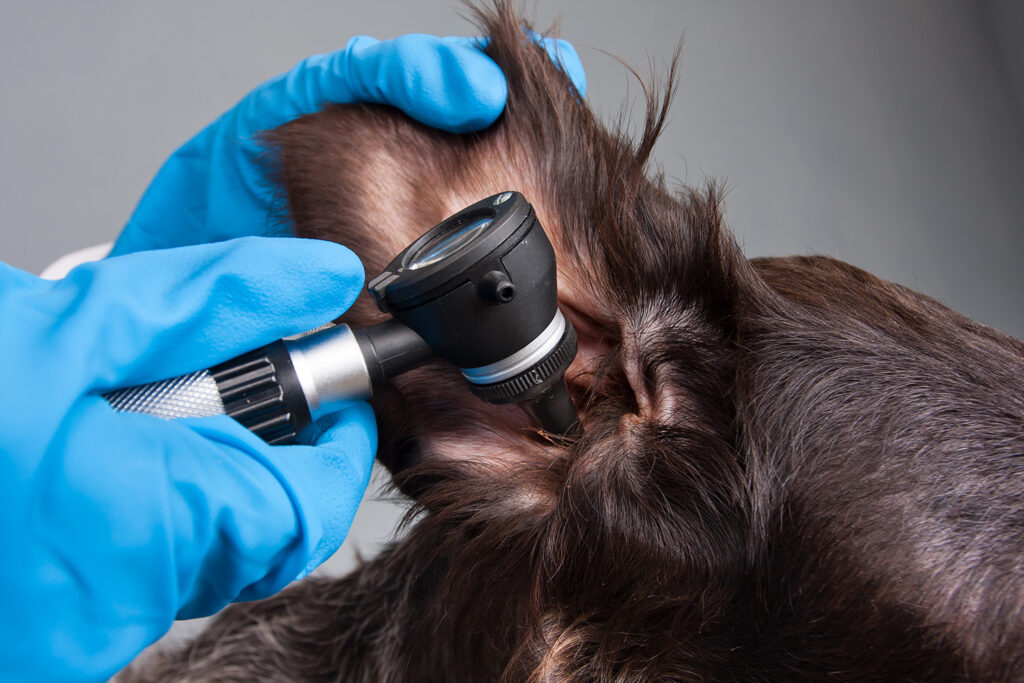

New Tech Helping Senior Dogs Stay Tuned In

The good news? Even if commercial dog hearing aids are rare, there’s a growing world of alternative tech tools that support aging pups—including hearing amplifiers for partial loss, vibration collars for training and attention, and light‑based cues for communication.

Dog hearing Aids

Hearing Amplifiers & Assistive Devices

  • Institutions like FETCHLAB at the University of Cincinnati are pioneering dog hearing aids—custom-fitted, adapted human devices that help dogs with mild-to-moderate hearing loss.
  • These start with veterinary hearing tests (e.g. BAER), ear molds, and cost roughly US $3,000+, with hopes to bring prices down over time.
  • While still experimental and region-limited, they offer promise for select cases—but require training and acclimation to be effective.

Vibration Collars: Gentle Alerts for Those Who Can’t Hear

  • Vibration-only collars (no shocks) have become a go-to for signaling attention and cues to deaf or hearing-impaired dogs.
  • For hearing-impaired or timid dogs, the PetSafe Vibration Bark Control Collar is a reliable option. It delivers vibration-only alerts designed to interrupt unwanted behaviors like excessive barking, without shock or tone. Many owners report it works well for helping deaf dogs tune into cues—especially when paired with hand signals or soft training routines. 

Light-Cue Systems & Visual Communication

  • A growing number of pet parents are pairing visual signals—like LED cues or attention‑getting lights—with training, especially for dogs who can no longer rely on sound.
  • These systems offer subtle ways to reestablish response to commands or train new signals, building on dogs’ visual strength and pattern-learning skills.

Signaling Tools & Wearables in Development

  • Innovative concepts, such as haptic vests or belts with directional vibrations, have emerged in DIY and maker communities. One such idea uses multiple vibration motors tied to listener location cues—creating directional feedback when you call your dog across a yard.
  • These prototypes highlight the future potential for wearable tech that helps dogs orient and respond without sound.
Tech Tool Best For Pros Cons
FETCHLAB Hearing Aids Partial/mild hearing loss High-end amplification, custom-fit Limited availability, high cost (~$3K+)
Vibration-Only Collars Deaf or low-hearing dogs Gentle, adjustable, no-shock, remote support Requires training; can confuse untrained dogs
Light/Visual Cue Systems Dogs with strong visual cues Non-disruptive, safe in all environments May require behavior retraining
Haptic Wearable Prototypes Future directional communication Innovative feedback, attention-getting Still in development; not widely available
🩺
Vet Tip

Test your dog’s hearing first—via BAER or clinical assessment—to see if amplification is a viable option. If not, vibration-based cues combined with hand signals give proven results.

💡 Pro Tip: Always begin with low levels of vibration and pair each buzz or light cue with a reward. Dogs learn faster when signals feel predictable and positive.

Training Tips for Dogs with Hearing Loss

Losing hearing doesn’t mean losing the ability to learn or connect.
Senior dogs can absolutely adapt—they just need a little help understanding what’s being asked of them.

Here’s how to get started:

Use Hand Signals for Common Commands

Dogs are already great visual learners. Replace verbal commands with simple, consistent gestures like:

  • ✋ Stop or stay
  • 👋 Come
  • 👆 Sit
  • 👈 Heel

💡 Pro Tip: Pair the gesture with a treat or praise every time until your dog starts responding instinctively.

Introduce Light or Vibration Cues

Once hand signals are working, layer in gentle alerts to get their attention from a distance:

  • Vibration collar buzz = “Look at me!”
  • Flashlight flick or porch light blink = “Come here” or “Dinner’s ready!”
  • Floor tap or stomp = ground vibrations many dogs can feel

Start by standing close and pairing each cue with eye contact + reward.

Keep It Routine, Repetitive, and Positive

  • Practice in quiet, familiar spaces first
  • Reward every correct response—even partial ones
  • Avoid surprises or sudden corrections
🩺
Vet Tip

Deaf or hard-of-hearing dogs may feel more anxious in new settings. Predictability builds trust.

🐶 Don’t Underestimate Their Intelligence

Your senior dog is still the same loving learner they’ve always been.
With consistency and patience, they can absolutely thrive.

What to remember: Your dog isn’t tuning you out—they just need a new way to tune in.

🩺
Vet Tip: When to Consider Hearing Support

Not every dog with hearing loss needs high-tech tools. But for some, the right support can be life-changing—especially when safety or stress become daily concerns.

Signs Your Dog Could Benefit From Support

  • Startles easily or seems anxious when approached
  • Doesn’t notice you until you’re directly in front of them
  • Sleeps through alarms, doorbells, or barking
  • Stops responding to commands they once knew
  • Seems more withdrawn or confused

These aren’t signs of stubbornness—they’re signs your pup may feel disconnected.

Ask Yourself:

  • Could a vibration collar help alert my dog from across the yard?
  • Would hand signals or light cues reduce their confusion?
  • Is my dog struggling to stay safe without hearing?

If yes, hearing support could restore clarity and comfort to your dog’s world.

Cost vs Benefit

  • Dog hearing aids: ~$3,000 and up, not widely available
  • Vibration/light collars: $40–$200 depending on features
  • Hand signal training: free, just needs time and love


💡 Pro Tip: Start with low-tech options like hand cues or a vibration collar before jumping into specialized devices.

Final Thoughts: Your Dog Still Wants to Hear You

Hearing loss doesn’t mean the bond is broken. It just means the way you communicate has to shift.

With today’s tech tools, smart training, and your endless patience, your senior pup can still feel connected, safe, and loved—even in a quieter world.