



TL;DR – Quick Takeaways
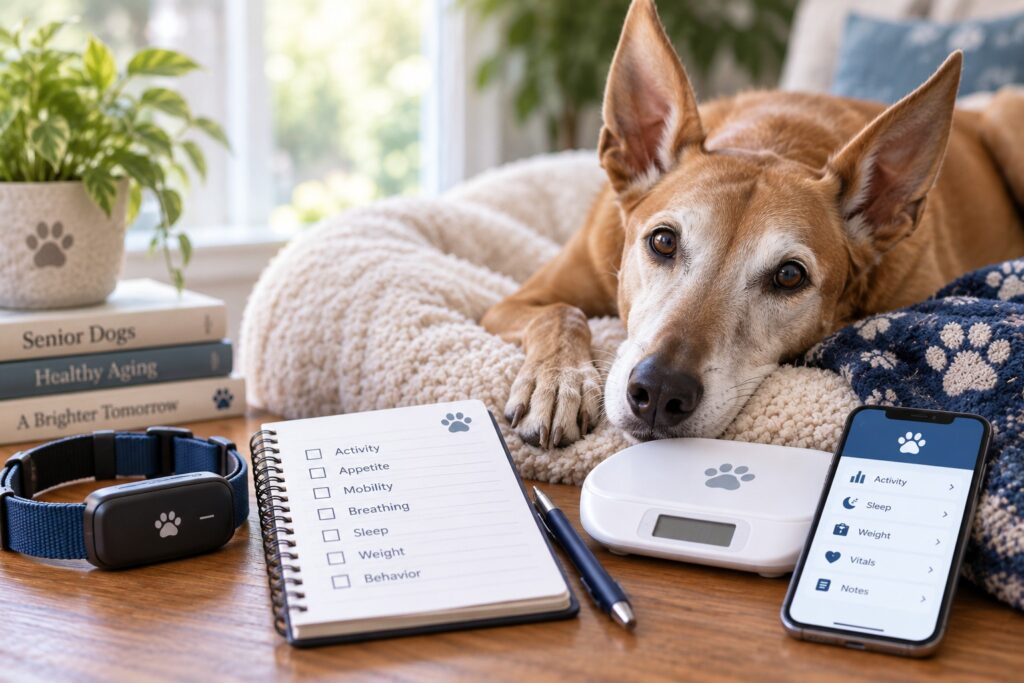
- • What to Track: Weight, mobility, activity, appetite, drinking, bathroom habits, sleep, breathing, behavior, and new or changing lumps.
- • What Matters Most: Changes from your dog’s normal baseline are often more useful than trying to match every senior dog to one definition of “normal.”
- • Breathing: A dog’s resting or sleeping respiratory rate is generally below about 30–35 breaths per minute, although your vet may give you a different target based on your dog’s health.
- • Helpful Tools: Smart collars, health monitors, pet scales, apps, photos, videos, and even a plain old notebook can make gradual changes easier to spot.
💡 Why it’s worth your scroll: Senior dogs have off days. What matters is recognizing when an occasional change starts becoming a pattern, so you have useful information to share with your vet.
Once your dog reaches their senior years, you start noticing changes. Some are pretty obvious. They sleep more. They don’t launch themselves off the furniture at the speed of light as often. That three-mile hike they used to beg for suddenly becomes a quick stroll around the cul-de-sac and then home for a nap.
Others are so gradual that you may not realize anything has changed until you think back six months. That’s where tracking your senior dog’s health can be surprisingly useful.
I’m not suggesting you turn your living room into a veterinary ICU or record every time your dog yawns. In fact, trying to monitor everything will probably give you a lot of useless information (and definitely drive you nuts…ask me how I know).
The goal is to establish your dog’s normal patterns and notice when those patterns change.
I’ve become much more aware of this with Freya now that she’s almost 10. She’s slowing down, she has more aches and stiffness than she used to, and she was recently diagnosed with a heart condition. Some changes really are part of getting older. Others deserve a closer look.
Sometimes the important thing isn’t one unusual day; it’s the trend.
What Should I Monitor in an Aging Dog?
For a senior dog, you’ll want to regularly monitor:
- Weight and body condition
- Muscle loss
- Appetite and drinking habits
- Mobility and ability to do normal activities
- Activity and exercise tolerance
- Resting or sleeping respiratory rate
- Coughing or changes in breathing
- Sleep patterns
- Bathroom habits
- Behavior, mood, and social interaction
- Cognitive changes
- New lumps or changes in existing ones
You don’t necessarily need to record every one of these every day. What’s more important is knowing your dog’s usual baseline and noticing meaningful changes over time.
Why “Different Than Usual” Matters More Than One Perfect Number
One of the most useful things I’ve learned from having a senior dog is that normal isn’t always a single number, it’s a pattern.
Maybe your dog has always been a picky eater. Maybe they’ve slept 16 hours a day since they were five. Maybe they have never enjoyed long walks. Those things aren’t automatically concerning just because your dog is older.
A change from their normal is more useful information.
This is also why I like the idea of using technology for senior dogs without relying on technology to tell us whether they’re healthy. A smart collar, activity tracker, health monitor, or app can collect information consistently. You’re still the person who knows that your dog normally follows you into the kitchen every single time you open the refrigerator.
If they suddenly stop doing that, the app doesn’t need to understand why it matters. You do.
1. Weight (and Not Just Whether They’re Getting Fat)
Regular weigh-ins are one of the easiest ways to spot a gradual change that can be surprisingly difficult to see. When you look at your dog every day, slow weight gain or loss can fly under the radar.
That’s particularly important with senior dogs because unexplained weight loss can accompany many health problems. Weight gain matters too, especially when extra pounds are making already-aging joints work harder.
AAHA recommends monitoring both body condition and muscle condition in senior dogs, not just looking at their overall weight.
Watch for muscle loss, too
A senior dog’s weight could remain fairly stable while they’re losing muscle and gaining fat.
Pay attention to changes around the:
- Hips and hindquarters
- Thighs
- Shoulders
- Spine
- Head and temples
You can ask your vet to show you how to evaluate your dog’s body condition score (BCS) and muscle condition score (MCS).
For home monitoring, a pet scale can be useful for smaller dogs. With a large dog, you’ll probably need a veterinary scale unless you happen to own a bathroom scale designed for livestock.
Either way, write the numbers down. A weight from six months ago isn’t terribly helpful if nobody remembers what it was.
You can find a billion resources on checking your dog’s BCS out there, but MCS isn’t as well-known. I really like this video for learning how to check:
2. Mobility and Everyday Movement
This is one of the big ones for Freya. At 10, she doesn’t move exactly the way she did at five. She has some aches and stiffness, particularly after resting, and she doesn’t jump as much as she used to.
But “slowing down” isn’t specific enough to track. Instead, watch what your dog can actually do.
Can they:
- Get up easily after sleeping?
- Climb the stairs?
- Get onto their favorite couch or bed?
- Get into the car?
- Squat comfortably to go to the bathroom?
- Walk on slippery floors?
- Complete their usual walk?
- Turn around and reposition themselves easily?
- Keep up with you instead of gradually falling behind?
You may notice that your dog hesitates before doing something they used to do automatically. That hesitation can be useful information.
Videos are especially handy here. Take a short video of your dog walking, getting up, using stairs, or doing whatever activity seems different. Repeat it periodically.
You’d be surprised how much easier it is to see gradual changes when you’re comparing videos instead of relying on memory.
3. Activity and Exercise Tolerance
Activity trackers and smart collars can be particularly useful with senior dogs because they can show trends that are hard to quantify yourself.
Maybe your dog is still taking the same walk every morning, but they’re moving more slowly. Maybe they’re spending less time wandering around the yard. Maybe they’re resting considerably more after exercise. Maybe their daily activity has dropped 20% over several months.
None of those numbers automatically diagnoses anything. They’re simply information you can bring to your veterinarian. Exercise tolerance is especially important for dogs with certain medical conditions.
That’s something we watch much more closely with Freya now because of her heart condition. I don’t expect a 10-year-old dog with heart disease to have the endurance she had as a young dog. But I do want to notice if what she comfortably handles today becomes noticeably harder next month.
Reduced exercise tolerance can occur with heart disease, but it can also be mistaken for ordinary aging or arthritis.
That’s exactly why tracking the change can be more useful than simply saying, “She’s getting old.”
4. Resting Respiratory Rate
If you track only a handful of actual numbers for your senior dog, resting respiratory rate is worth knowing, particularly if your dog has heart or respiratory disease.
It’s now one of the things we monitor with Freya because of her heart condition.
What’s a normal resting respiratory rate for a dog?
A normal dog at rest or asleep generally breathes fewer than about 30 to 35 times per minute. Tufts Veterinary Cardiology notes that normal dogs and cats are usually below 32 to 35 breaths per minute at rest, while UC Davis lists a normal canine respiratory rate of approximately 10 to 30 breaths per minute.
Your veterinarian may give you a specific target based on your dog’s health and medical history, so use that number if you’ve been given one.
For dogs with heart disease, knowing their normal sleeping respiratory rate can be particularly valuable because a persistent increase may indicate a change that needs veterinary attention.
How to measure your dog’s resting respiratory rate
Wait until your dog is genuinely relaxed or, preferably, sleeping.
Watch the chest rise and fall. One complete rise and fall equals one breath.
Count breaths for 30 seconds and multiply by two.
So:
14 breaths in 30 seconds = 28 breaths per minute.
Don’t measure immediately after exercise, when your dog is hot, excited, dreaming vigorously, or panting. You’re trying to measure quiet resting respiration, not “a squirrel just had the audacity to enter my yard” respiration.
Also pay attention to breathing effort, not just the number. Increased abdominal effort, unusually deep breathing, or difficulty getting comfortable can matter even if you haven’t managed to get a perfect count. Tufts recommends monitoring both breathing rate and effort in dogs with heart disease.
For Freya, this is one area where having actual numbers is much more useful than thinking, “Her breathing seems kind of fast.”
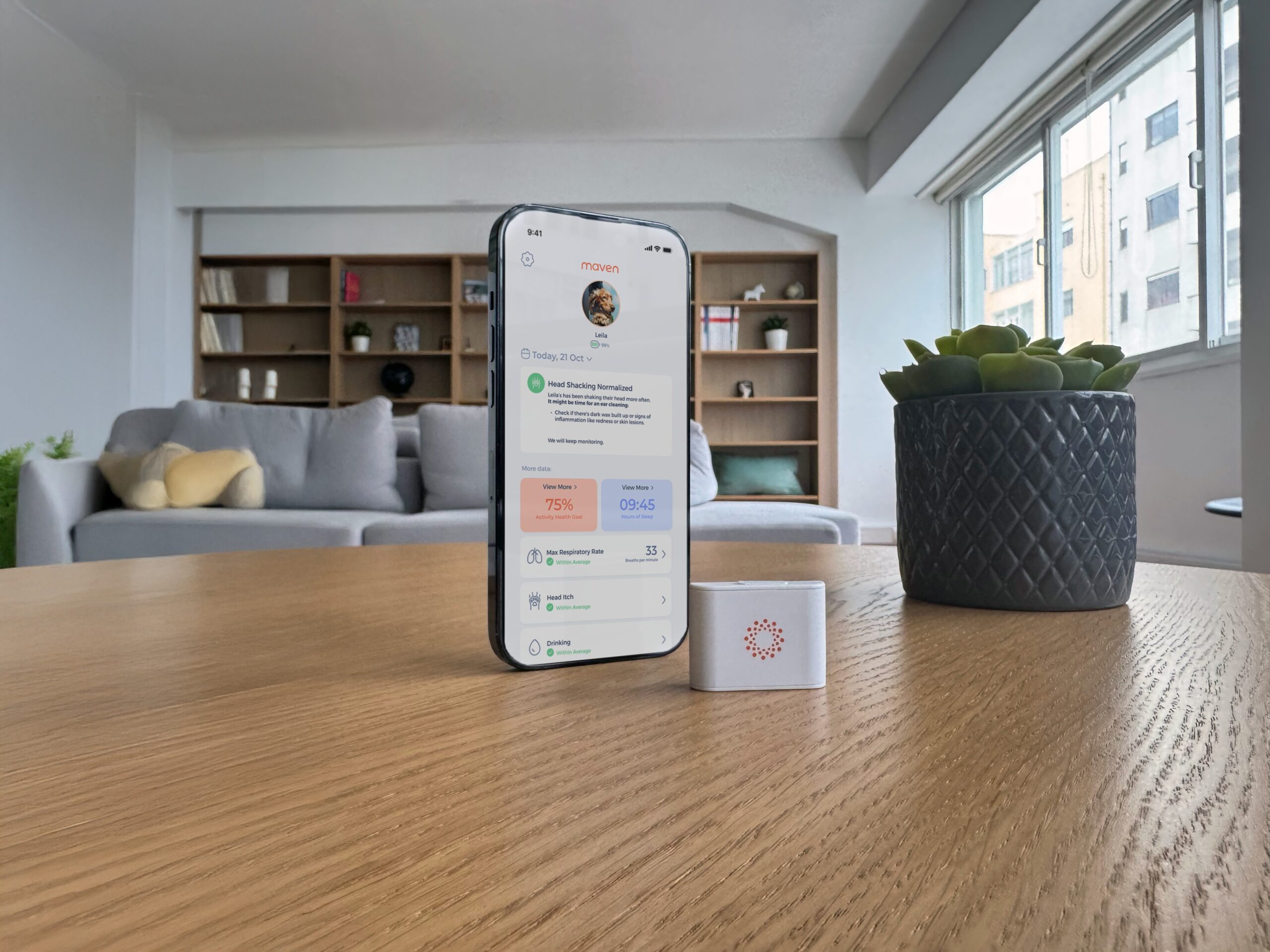
FYI, Maven is a HUGE helper here!
Turn any collar into a smart health monitor. Maven tracks your dog’s heart rate, respiratory rate, activity, rest, hydration, and more—helping you catch early signs of illness before they become serious. Lightweight (just 14g), waterproof, and packed with vet-level insights, it’s like having a personal health assistant for your pup.
BEST DEAL ON THE WEB
SAVE $88 TODAY!
5. Appetite and Eating Habits
You don’t need to record every kibble unless there’s a medical reason to do so.
But pay attention to patterns.
Is your dog:
- Leaving food behind more often?
- Taking longer to eat?
- Suddenly becoming unusually picky?
- Dropping food?
- Chewing differently?
- Walking away from meals?
- Acting hungry but struggling to eat?
- Eating less overall?
Appetite changes can be associated with illness, pain, dental problems, medication side effects, nausea, sensory changes, and plenty of other things.
And if your dog already has a chronic condition or takes medication, changes in appetite may become even more useful to track.
AAHA considers appetite and weight changes important indicators when assessing senior-pet health and quality of life.
6. Drinking and Bathroom Habits
Most of us aren’t measuring exactly how many ounces of water our dog drinks every day, and for a healthy senior dog, you probably don’t need to.
But you should have a general idea of what’s normal.
Pay attention if your dog suddenly:
- Drinks much more or less
- Needs to urinate more frequently
- Starts having accidents
- Strains to urinate or defecate
- Develops persistent diarrhea or constipation
- Starts waking you at night to go outside
- Has noticeable changes in urine or stool
Some medications can also change thirst and urination, so ask your veterinarian what to expect when your dog starts something new.
Bathroom changes aren’t particularly glamorous data, but dogs have never been especially concerned with maintaining our dignity anyway.
7. Sleep
Yes, senior dogs sleep a lot. That’s usually not particularly shocking. What’s more useful is noticing how their sleep changes.
A dog who has always slept deeply for most of the afternoon isn’t suddenly concerning because they turned 10.
But watch for things like:
- Restlessness at night
- Repeatedly getting up and repositioning
- Pacing instead of sleeping
- Sleeping substantially more than usual
- Difficulty getting comfortable
- Reversing day and night routines
- Suddenly choosing different sleeping positions or locations
Sleep changes can be associated with pain, cognitive dysfunction, anxiety, or medical conditions.
For dogs with heart disease, altered sleeping patterns can sometimes accompany changes in breathing or comfort. Again, context matters.
8. Coughing and Breathing Changes
An occasional cough doesn’t require a spreadsheet. A pattern might. If your senior dog begins coughing, note:
- When it happens
- What they were doing immediately beforehand
- How long it lasts
- Whether exercise triggers it
- Whether it happens during sleep or rest
- Whether it’s becoming more frequent
- Whether anything else happens with it
Video is incredibly useful here, too.
Dogs have an irritating habit of arriving at the vet and refusing to demonstrate the exact symptom that prompted the $200 appointment.
Record it when you can.
For dogs with diagnosed heart or respiratory conditions, your veterinarian may want much more specific monitoring.
9. Behavior and Personality
Behavior changes in senior dogs deserve more attention than they sometimes get.
We have a tendency to explain them away.
“He’s just getting cranky.”
“She’s old.”
“He doesn’t like people anymore.”
Maybe.
But pain, hearing or vision loss, cognitive changes, anxiety, and medical problems can all change behavior.
Watch for:
- New irritability
- Avoiding family members
- Increased clinginess
- New fears or anxiety
- Confusion
- Getting stuck in corners or behind furniture
- Staring into space
- Changes in vocalization
- House-soiling
- Changes in interactions with other pets
- Altered sleep-wake cycles
AAHA lists changes such as disorientation, altered interactions, house-soiling, sleep changes, vocalization changes, and new fears among signs worth monitoring in older dogs.
Don’t assume dementia every time your senior dog does something weird, though. Plenty of medical issues can affect behavior, and that’s exactly why changes should be discussed with your vet.
10. Lumps and Bumps
Senior dogs collect lumps like they’ve suddenly taken up a very unfortunate hobby.
Many turn out to be benign, but you can’t reliably determine what a lump is just by looking at or feeling it.
If you find one, note its location and approximate size and show it to your veterinarian.
Photos can help you track visible growths over time. You can also create a simple “lump map” showing where each one is located.
AAHA’s senior-care guidelines recommend documenting masses with diagrams or photographs and advise veterinary evaluation rather than simply relying on a watch-and-wait approach.
What Technology Can (and Can’t) Do for Senior Dogs
This is where I think senior dog technology becomes genuinely useful rather than just interesting.
Smart collars and activity trackers
These can automatically collect information about activity, rest, sleep, and sometimes other health metrics.
The value isn’t necessarily knowing that your dog took 4,872 steps Tuesday. It’s realizing that their typical activity has been steadily declining for three months.
Health monitors
Depending on the device, home health monitors may track things such as resting patterns, respiratory rate, heart rate, sleep, activity, or other measurements.
For dogs with diagnosed medical conditions, ask your veterinarian which measurements are actually useful.
More data isn’t automatically better data.
Pet scales
Regular weigh-ins can reveal gradual weight changes before they’re obvious visually.
You don’t need to weigh your dog every morning. For most senior dogs, periodic measurements are plenty unless your veterinarian recommends more frequent monitoring.
This electronic scale has a large 33 x 19 inch (840 x 480mm) tempered glass weighing platform with a 0.3 inch (8mm) extra thickness, fitting most dog and cat breeds and super easy for maintenance.

Apps
Apps can be useful for logging symptoms, medications, weight, respiratory rate, appointments, appetite changes, and questions you want to remember at the next vet visit.
Some devices automatically create trends and reports you can share with your veterinarian, which is considerably more useful than trying to remember what happened sometime around “that Tuesday when the dishwasher broke.”
A plain old notebook
Write down the date, what happened, and anything that seems relevant.
- August 18: Took longer than usual to get up after nap. Fine once moving.
- August 21: Didn’t finish breakfast. Ate normally at dinner.
- August 24: Sleeping respiratory rate 24.
That’s useful information.
Don’t Track Everything Every Day
This may be the most important part.
Monitoring shouldn’t become an obsession.
If your senior dog is generally healthy, you probably don’t need a daily dashboard containing 47 health metrics.
Instead, choose a few things that matter for your particular dog.
For Freya, her heart condition makes respiratory rate, breathing changes, coughing, exercise tolerance, appetite, and overall energy especially relevant. Her age and aches make mobility important, too.
Another senior dog might need completely different monitoring.
A dog with kidney disease may require closer attention to drinking, urination, appetite, and weight. A dog with arthritis may benefit from more detailed mobility tracking. A dog showing possible cognitive changes may need a behavior and sleep log.
Your veterinarian can help you decide what deserves the most attention.
Look for Trends, Not Random Bad Days
Senior dogs have off days.
So do I, and nobody has started charting mine yet.
One unusually sleepy afternoon doesn’t necessarily mean anything. Neither does one unfinished breakfast or one slow walk on a hot day.
What becomes more interesting is repetition.
Once is an observation. A recurring change is a pattern.
That’s where notes, apps, scales, smart collars, photos, and health monitors earn their keep.
They give you something better than memory.
When Should You Call Your Vet About a Change?
You don’t have to wait until a change becomes dramatic.
Contact your veterinarian when you notice something new, persistent, worsening, or substantially different from your dog’s normal behavior or physical abilities.
Some symptoms require much faster attention.
Difficulty breathing, collapse or fainting, blue or gray gums, severe weakness, prolonged coughing with breathing difficulty, or other signs of significant distress warrant urgent veterinary evaluation. For pets with heart disease, Tufts specifically lists severe breathing difficulty, very rapid breathing with increased effort at rest, and collapse or fainting among situations requiring emergency care.
Your veterinarian may also give you different thresholds based on your dog’s specific condition. Those individualized instructions always take priority over general guidelines you find online.
You Know Your Senior Dog Better Than Any Device Does
I’m a big fan of pet technology when it gives us information we can actually use. But the most important senior-dog monitoring tool is still the person who lives with the dog. You know how quickly they normally get off the couch. You know whether they’re usually waiting in the kitchen at dinner. You know how far they normally walk before they’re ready to turn around. You know whether they sleep sprawled across the bed or curled into a ball.
And you know when something just isn’t quite the same.
Technology can put numbers behind those observations. A notebook can give you a timeline. Photos and videos can show you changes you might otherwise miss. None of them replaces veterinary care.
What they can do is help you walk into an appointment with something much more useful than, “I don’t know, she just seems different lately.”
And with senior dogs, sometimes that little bit of extra information makes a very big difference.