



Dogs are remarkably good at figuring out how to navigate life when one of their senses isn’t available to them. A deaf dog isn’t sitting around thinking about everything he can’t hear, and a blind dog isn’t comparing today’s view with the one he had five years ago.
They adapt. Usually much better than we give them credit for.
That doesn’t mean deaf and blind dogs never feel uncertain or anxious, though. Changes in their environment can be harder to interpret, being left alone may feel different, and unfamiliar situations can take a little more time to process when they’re missing some of the sensory information other dogs rely on.
That’s where something as simple as a Snuggle Puppy can be surprisingly useful.
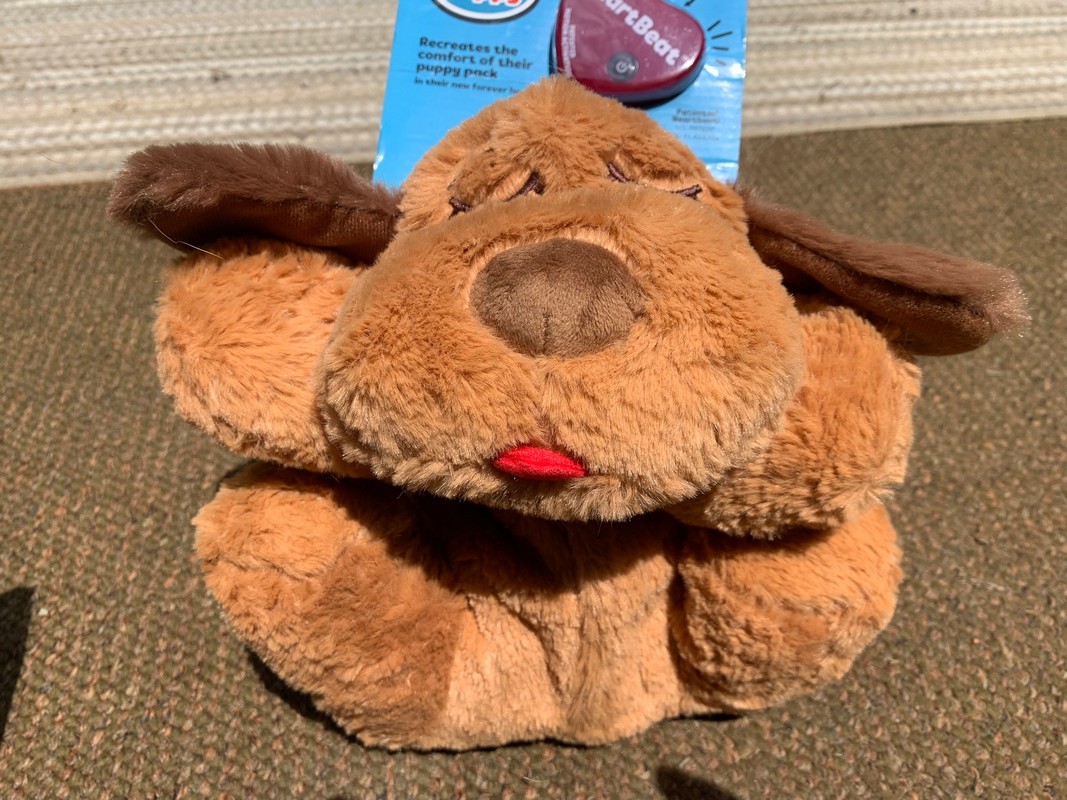
Snuggle Puppy is usually associated with puppies, particularly those adjusting to sleeping away from their mother and littermates. But the basic idea behind it isn’t limited to puppies at all. The plush toy combines softness, warmth, and a pulsing heartbeat designed to mimic the physical presence of another animal.
For a dog who can’t see, can’t hear, or has lost both senses, those tactile cues may be especially meaningful.
Snuggle Puppy is designed to help ease anxiety and make transitions less stressful for puppies. With a real-feel heartbeat and optional heat pack, it mimics the comfort of sleeping beside littermates. It’s especially helpful for crate training, first nights home, and helping puppies settle at bedtime and more.
Deaf and Blind Dogs Experience Their Environment Differently
Dogs don’t rely on one sense at a time. They’re constantly combining information from smell, sight, hearing, touch, movement, and even vibrations through surfaces.
Take one source of information away, and the others become more important.
A deaf dog may pay considerably more attention to visual signals, movement, scent, touch, and vibration. A blind dog still has hearing, smell, touch, and spatial memory to help him understand where he is and what’s happening around him.
A dog who is both deaf and blind has fewer ways to gather information from a distance. Touch, scent, vibration, routine, and familiar objects become particularly valuable because they help make his immediate surroundings more predictable.
And predictability matters.
A familiar bed in a familiar location tells a dog something about where he is. Your scent tells him you’re nearby (or at least that you were recently). The texture of a rug can become a landmark. A gentle touch can announce your presence without startling him.
Snuggle Puppy can become another familiar piece of that sensory landscape.
Why Snuggle Puppy May Be Particularly Comforting for Deaf Dogs
At first glance, a heartbeat toy might seem like an odd choice for a dog who can’t hear.
Except Snuggle Puppy isn’t really an auditory toy.
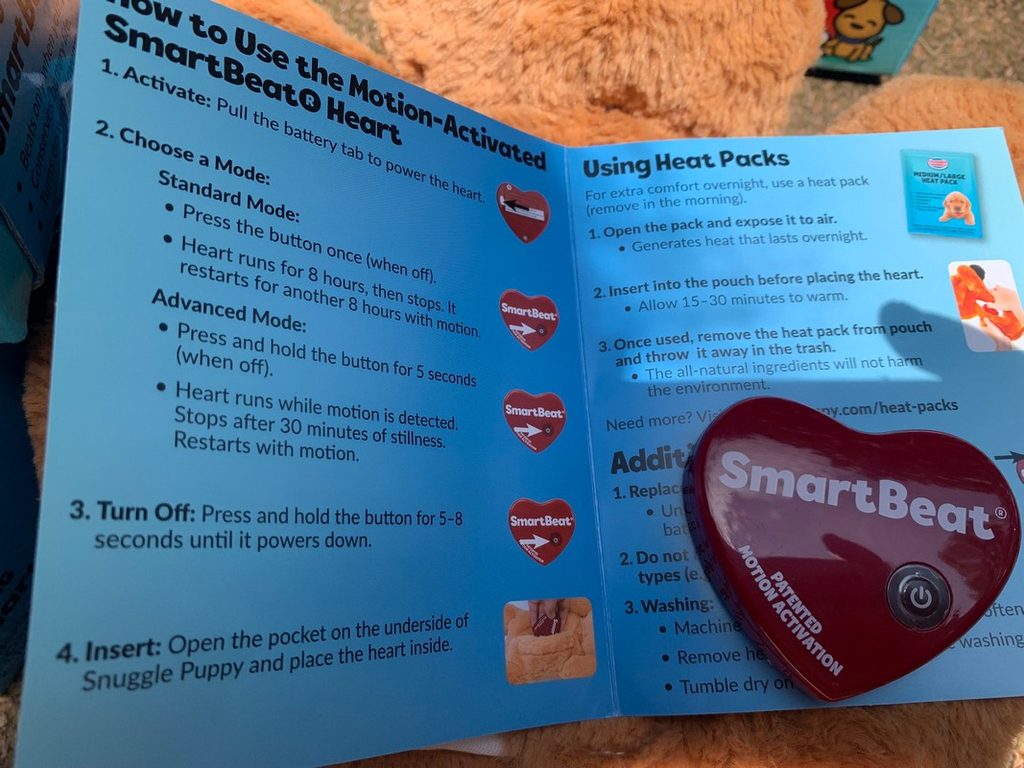
The Real-Feel Heartbeat inside the plush creates a physical pulsing sensation. The current SmartBeat heart can also operate using motion activation, while the plush can be used with an air-activated heat pack for additional warmth.
That means a deaf dog doesn’t need to hear the heartbeat to interact with the sensory features that make Snuggle Puppy different from an ordinary stuffed animal.
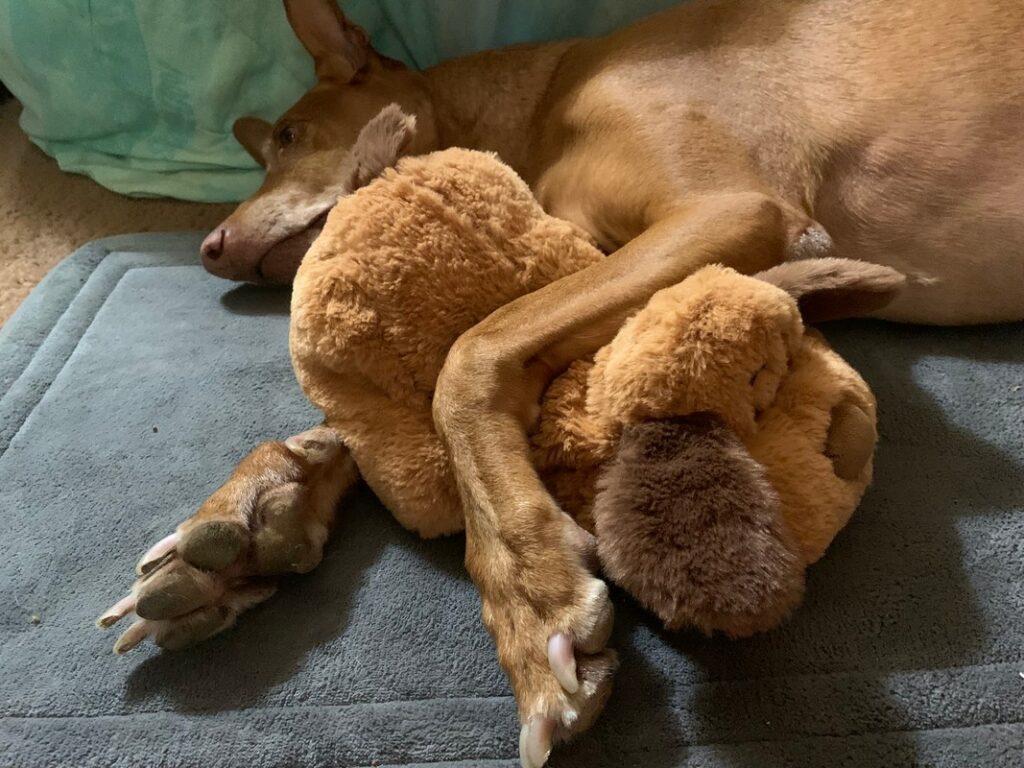
When he’s curled against it, the physical pulse can be felt through the plush.
That’s an important distinction because deaf dogs can still perceive vibrations. Anyone who has ever watched a deaf dog notice a door slam, someone walking heavily across the floor, or another physical vibration knows that “can’t hear” doesn’t mean “can’t sense movement.”
Snuggle Puppy offers that sensation in a much gentler, more predictable form.
Add the warmth of the optional heat pack, and you have something that recreates a few physical characteristics of resting against another warm body without requiring another dog to actually be there.
The heat packs are air activated, odorless, and designed to provide warmth while enclosed inside the Snuggle Puppy.
For a deaf dog who enjoys physical closeness, that’s a pretty clever combination.
Why Snuggle Puppy Can Help Blind Dogs, Too
Blind dogs have a different set of challenges.
Many do incredibly well in familiar environments because they essentially build a mental map of the house. Furniture stays where it’s supposed to stay, food and water bowls have predictable locations, and familiar scents provide additional information.
Things can get trickier when something changes.
Travel, boarding, moving to a new home, spending time in an unfamiliar room, going to the vet, or even rearranging furniture can temporarily remove some of those familiar reference points.
Snuggle Puppy can provide something consistent within those changing environments.
The dog doesn’t have to see it to recognize it.
After repeated use, its texture and shape become familiar. More importantly, it will begin picking up the scents of your home and your dog. For a blind dog whose nose is doing a significant amount of environmental detective work anyway, that familiarity can matter.
You could keep Snuggle Puppy in your dog’s usual sleeping area and then bring it along when you travel, for example. Suddenly an unfamiliar hotel room, rental house, boarding facility, or family member’s home contains something recognizable.
It’s not going to magically make an unfamiliar place familiar. But it gives your dog one known object within all that new information.
Sometimes that’s enough to make settling down a little easier.
For Deaf-Blind Dogs, Touch Becomes Even More Important
Dogs who are both deaf and blind deserve a little extra attention here because Snuggle Puppy’s design makes a particularly interesting kind of sense for them.
A deaf-blind dog can’t watch you walk into the room or hear you approaching. He may rely heavily on scent, air movement, vibration, touch, and established routines to understand what’s happening around him.
Physical contact can therefore carry a lot of information.
Snuggle Puppy isn’t a substitute for human companionship (or canine companionship, if your dog has another dog he enjoys being around). What it can provide is a consistent tactile presence during times when you can’t physically sit beside your dog.
The soft body gives him something to lean against or curl around. The heat pack adds warmth. The pulsing heart adds gentle, repetitive movement.
None of those features requires sight or hearing.
That’s really the key here.
Snuggle Puppy isn’t asking a sensory-impaired dog to compensate for what he can’t perceive. Its primary comfort features can be experienced through senses he still has.
A Familiar Comfort Object Can Have Value of Its Own
There’s another part of this that has less to do with the heartbeat itself.
Dogs form associations with objects.
The leash means we’re going somewhere. The food bowl means something much more important is about to happen. The suspicious bottle that only appears at bath time means perhaps everyone should immediately leave the premises.
Comfort objects can develop associations, too.
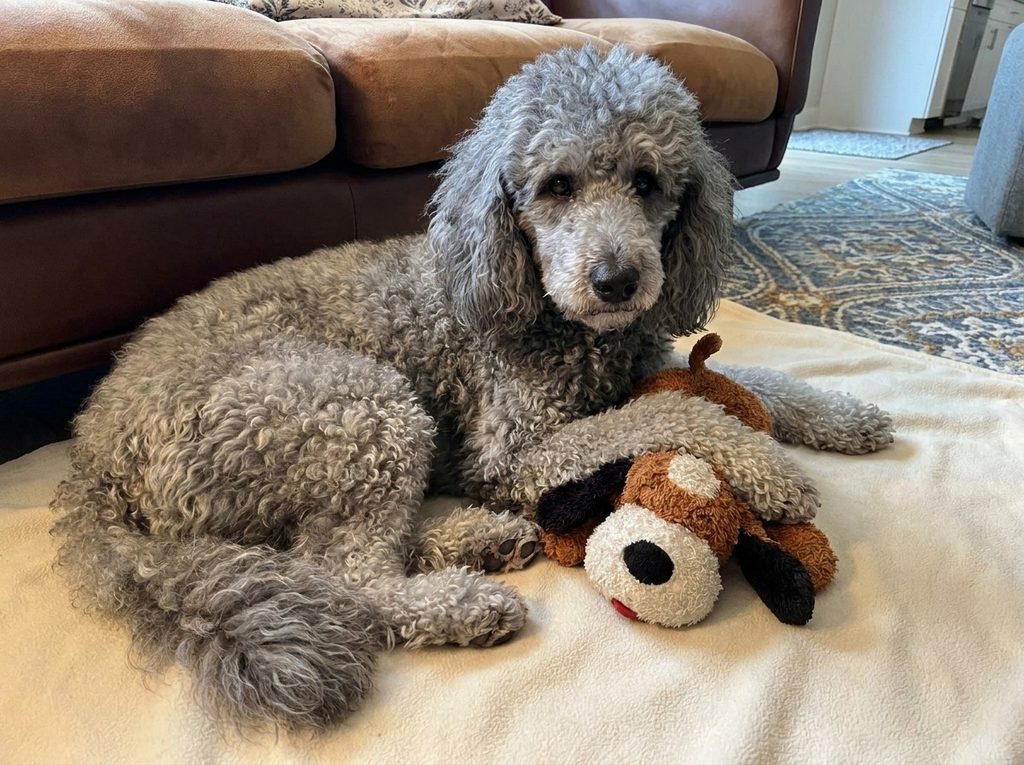
If Snuggle Puppy consistently appears during rest and quiet time, your dog may eventually associate it with settling down.
That’s one reason I wouldn’t necessarily reserve it only for stressful situations.
Let your dog investigate it when he’s already comfortable. Put it near his bed. Allow him to sleep beside it if he chooses. Bring it out during quiet evenings.
You’re giving him a chance to make his own positive association with it rather than introducing this strange stuffed creature for the first time when he’s already overwhelmed.
For a dog who depends heavily on routine and familiarity, that distinction makes sense.
It Can Be Helpful During Major Transitions
Snuggle Puppy may be especially worth considering when a deaf or blind dog is going through a significant change.
That could include moving to a new house, adoption, foster placement, boarding, recovering away from his normal sleeping spot, traveling, or adjusting after the loss of an animal companion.
Some senior dogs also gradually lose vision or hearing rather than being born without those senses. That creates a slightly different situation.
A dog who has always been blind has spent his entire life learning how to navigate without vision. A senior dog experiencing progressive vision loss has to adjust to a world that suddenly works differently.
The same is true for hearing loss.
That transition can sometimes come with uncertainty, particularly at night or in unfamiliar surroundings. A familiar tactile comfort object won’t solve the underlying sensory loss, of course, but it may give the dog another predictable source of physical comfort while he’s adapting.
Snuggle Puppy itself is designed for more than the puppy stage, with the company specifically describing it as a comfort tool that can continue being used for situations such as travel, thunderstorms, and vet visits.
The Heartbeat Isn’t the Only Useful Feature
It’s easy to focus entirely on the heartbeat because that’s what makes Snuggle Puppy stand out from the approximately 4,782 stuffed animals already living in some dogs’ toy baskets.
For sensory-impaired dogs, though, I think it’s more useful to look at the whole package.
You have:
- A soft surface for physical contact. Dogs who enjoy sleeping against something have a plush body to lean into.
- A pulsing heartbeat they may be able to feel. This can provide gentle tactile stimulation without relying on hearing or vision.
- Optional physical warmth. The air-activated heat pack sits inside the plush and is designed to provide warmth for overnight use.
- A familiar object that develops familiar scents. Over time, the toy becomes part of the dog’s normal environment.
- Something portable. You can take that familiar object with you when your dog’s surroundings change.
Put all of those together and Snuggle Puppy becomes less of a “heartbeat toy” and more of a multisensory comfort object.
For a deaf or blind dog, that’s a much more interesting use for it.
How to Introduce Snuggle Puppy to a Deaf or Blind Dog
Don’t assume your dog will immediately fling himself dramatically into Snuggle Puppy’s arms.
Some will probably cuddle with it right away. Others may sniff it and walk away. A few will regard this mysterious new resident with the suspicion it clearly deserves.
Let your dog decide.
For a blind dog, place Snuggle Puppy somewhere he can easily encounter it without putting it directly in his path. You don’t want a new object suddenly appearing in a well-established walking route.
Let him investigate it through scent and touch first.
With a deaf-blind dog, I’d be especially careful about suddenly pressing a vibrating object against his body. Allow him to discover it gradually. You can initially introduce the plush without activating the heart and add the heartbeat later once the toy itself is familiar.
The same goes for the heat pack.
You don’t necessarily need to use every feature immediately. In fact, some dogs may prefer Snuggle Puppy without heat, while others may love the warmth.
The goal isn’t to convince your dog that he should find it comforting. You’re simply giving him the option.
Add Your Scent for Another Layer of Familiarity
One of the easiest ways to make Snuggle Puppy more recognizable is simply to let it smell like home.
You don’t need perfume, sprays, or anything elaborate. In fact, please don’t turn the poor thing into a Yankee Candle.
Keep it around your dog’s bedding or other familiar fabrics so it naturally picks up household scents.
If you’re bringing it along for a trip or boarding stay, start using it at home beforehand rather than pulling a pristine Snuggle Puppy out of the box once you arrive.
For a blind or deaf-blind dog in particular, scent can help identify the toy as something familiar even when everything surrounding it has changed.
Where Snuggle Puppy Fits Into a Bigger Comfort Plan
Snuggle Puppy should be one piece of the puzzle, not the entire strategy for helping a sensory-impaired dog feel secure.
Deaf and blind dogs benefit enormously from predictable environments and communication methods adapted to the senses they have available.
That may mean keeping furniture layouts consistent, using textured floor surfaces as location cues, establishing predictable daily routines, using touch signals, creating safe sleeping areas, or using scent strategically to help a dog navigate.
A veterinarian or qualified trainer experienced with sensory-impaired dogs can also help if a dog is showing significant anxiety, sudden behavioral changes, or difficulty adjusting to vision or hearing loss.
Snuggle Puppy fits nicely alongside those strategies because it doesn’t require the dog to do anything.
There’s no training sequence to learn. No visual cue to watch. No sound to respond to.
It’s simply there.
A Few Safety Considerations
As with any plush product, consider your individual dog’s chewing habits.
A dog who cuddles stuffed toys is obviously a very different candidate from one whose life’s mission is to determine exactly how quickly every stuffed animal can be converted into stuffing.
Snuggle Puppy contains a removable electronic heartbeat and can also hold a disposable heat pack, so dogs who aggressively destroy plush toys shouldn’t have unsupervised access to those internal components.
The heartbeat and heat pack should also be removed before washing. Snuggle Puppy recommends machine washing the plush on a gentle cycle with mild detergent and air drying it.
For dogs experiencing new vision or hearing loss, it’s also important not to assume anxiety or behavioral changes are simply part of aging. Sudden sensory changes warrant a veterinary evaluation to determine what’s causing them.
The Bottom Line: Comfort That Doesn’t Depend on Sight or Sound
What I like most about the idea of Snuggle Puppy for deaf and blind dogs is how uncomplicated it is.
We tend to think of assistive products in terms of replacing something that’s missing. Snuggle Puppy takes a different route. It offers comfort through things dogs already understand instinctively: warmth, physical closeness, familiar scent, and the gentle sensation of another heartbeat nearby.
A deaf dog doesn’t need to hear it. A blind dog doesn’t need to see it.
And a deaf-blind dog doesn’t need either sense to curl up beside something soft and warm and feel that subtle pulse beneath the plush.
It won’t replace your dog’s normal routine, training, environmental adaptations, or (most importantly) you. But it can become one more familiar thing in his world.
For a dog navigating that world with fewer sensory cues, familiar isn’t a small thing at all.