
🧠 Quick Take:
Nighttime pacing in senior dogs is usually linked to cognitive decline, anxiety, pain, or routines that no longer meet their needs. It’s common, it’s frustrating, and it’s often fixable with the right support.
Why You Should Keep Reading:
Learn what nighttime pacing really means, how to tell the difference between discomfort and cognitive changes, and what you can do to help your senior dog feel calmer—and sleep better.
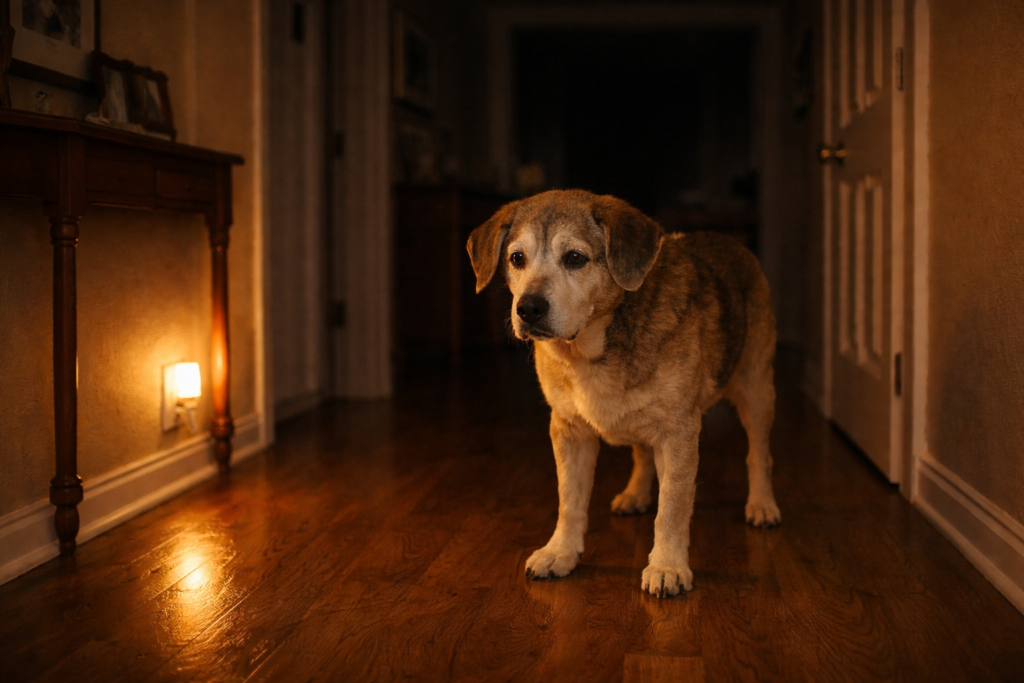
If your older dog suddenly starts pacing at night—wandering the halls, standing in doorways, circling the living room, or repeatedly getting up and lying back down—you’re not imagining things. And you’re definitely not alone.
This is one of the most common nighttime issues senior dog parents deal with. It’s also one of the most exhausting, because when your dog can’t settle, no one sleeps well.
The tricky part is that nighttime pacing isn’t usually caused by just one thing. It’s often a mix of physical discomfort, anxiety, cognitive changes, and routines that don’t quite fit your dog anymore.
Let’s break down what’s really going on—and what you can do to help your dog (and yourself) get some rest.
Senior dogs pace at night for a handful of common reasons, and they often overlap. Understanding what’s behind the behavior is the first step toward helping your dog feel more comfortable after dark.
One of the most common—and misunderstood—reasons senior dogs pace at night is canine cognitive dysfunction (CCD), which is essentially dog dementia.
As dogs age, changes in their brain chemistry can affect memory, awareness, and their internal body clock. That’s why pacing often happens at night, even if your dog seems relatively normal during the day.
Signs of cognitive decline often include:
Nighttime pacing or restlessness
Standing and staring at walls or into space
Getting “stuck” behind furniture
Confusion about where they are
Reversed sleep schedules (sleeping all day, restless at night)
A big part of this is disrupted circadian rhythm. Your dog’s sense of “night = sleep” starts to blur, and they may feel awake, disoriented, or unsettled when the house goes quiet.
This pacing isn’t stubbornness or attention-seeking. Your dog may genuinely not know what they’re supposed to be doing.
Even dogs who’ve always been confident can develop anxiety as they age.
At night, familiar daytime cues disappear—light, noise, movement, routine—and that can make older dogs feel vulnerable or unsure. If their vision or hearing is declining, the world may feel especially confusing in the dark.
Anxiety-related pacing often looks like:
Following you from room to room
Panting or whining without an obvious reason
Inability to settle even when clearly tired
Restlessness that improves when you’re nearby
Some dogs pace because they’re afraid of being alone. Others do it because they’re overstimulated internally and don’t know how to calm themselves anymore.
This is especially common in dogs who’ve experienced changes recently, like:
A move
A new pet
Loss of a companion animal or person
Changes in household schedule
Pain is a huge and often overlooked cause of nighttime pacing.
Arthritis, hip dysplasia, spinal issues, and general joint stiffness tend to feel worse at night—especially after a day of activity. Lying down can be uncomfortable, and staying in one position too long may cause stiffness.
Your dog may pace because:
They can’t find a comfortable position
Lying down hurts, but standing does too
Pressure on certain joints triggers discomfort
Signs pain might be involved:
Slow or stiff movement
Hesitation before lying down
Getting up repeatedly after settling
Panting without heat or exertion
Even dogs on pain medication may still experience nighttime discomfort, especially if doses wear off overnight.
Here’s the part no one really talks about: what worked for your dog at 5 years old may not work at 13.
Senior dogs often need:
More bathroom breaks
Earlier dinners
Gentler evening exercise
Longer wind-down time
If your dog paces shortly after bedtime, they might:
Need to go outside
Be hungry (especially if medications affect appetite)
Be overtired and overstimulated
Dogs don’t always pace because they have excess energy. Sometimes they pace because they’re too tired and can’t self-regulate anymore.
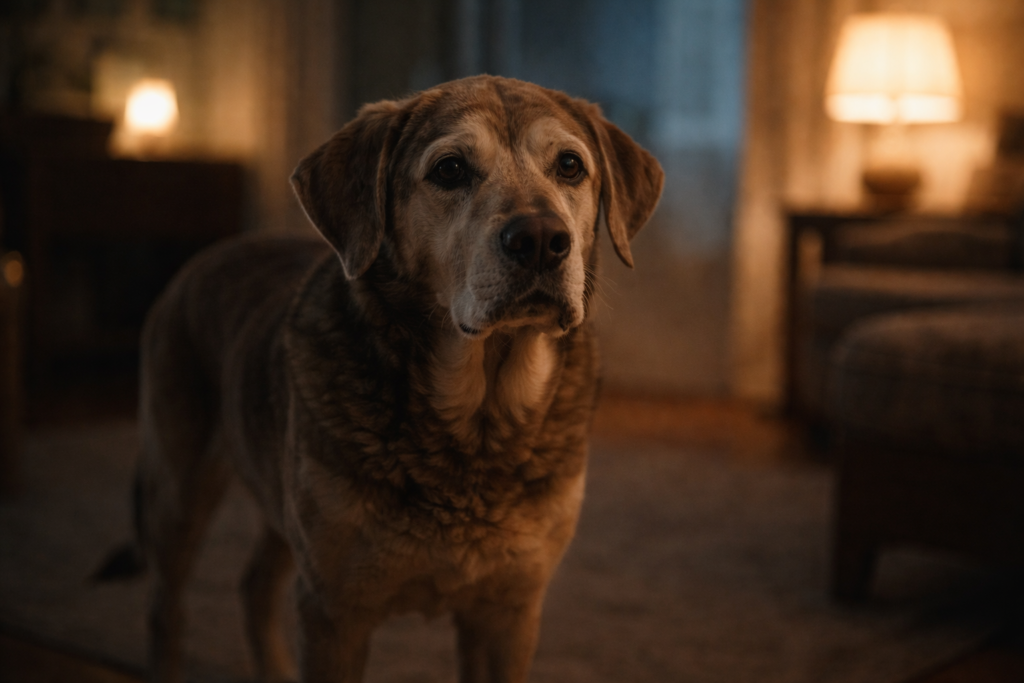
The goal isn’t just to stop pacing—it’s to make your dog feel safe, comfortable, and oriented.
Consistency matters more than ever for senior dogs.
Aim for the same order every night:
Calm evening walk or gentle movement
Dinner or light snack
Bathroom break
Quiet time (dim lights, low stimulation)
Avoid sudden transitions. Give your dog time to shift from “day mode” to “rest mode.”
A predictable routine helps reduce anxiety and gives dogs with cognitive decline something familiar to anchor to.
Small changes can make a big difference.
Helpful tweaks include:
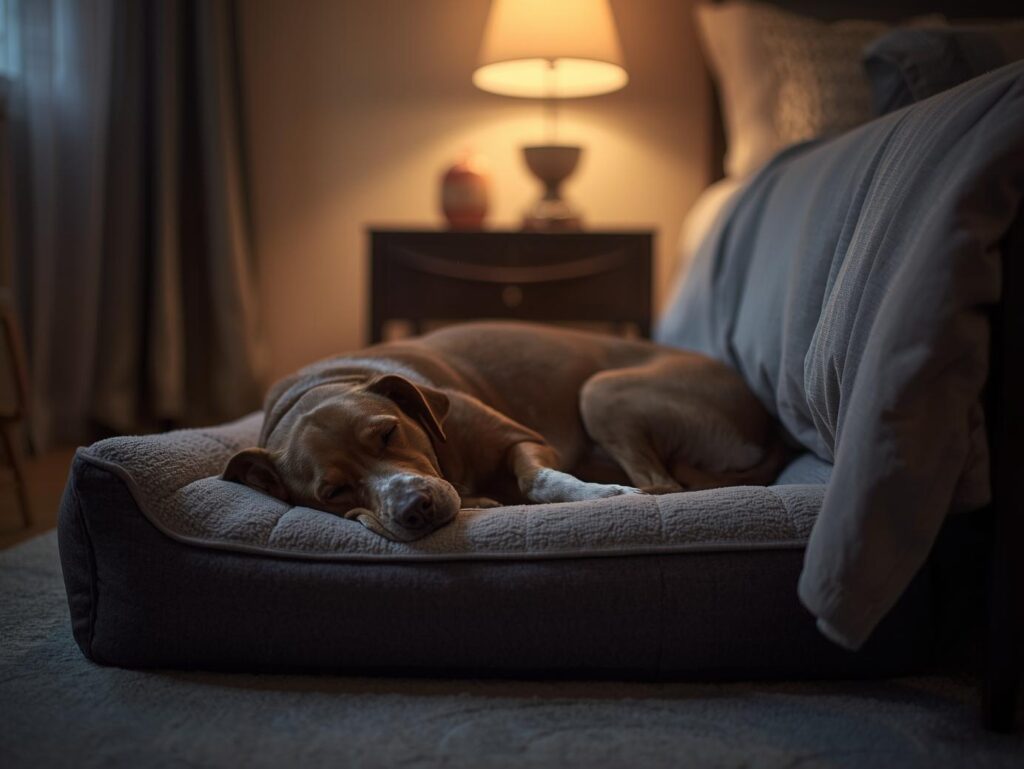
A nightlight to reduce disorientation
An orthopedic dog bed for joint support
A familiar sleeping location (don’t move beds around unless needed)
White noise or a fan to mask sudden sounds
Some dogs settle better when they sleep close to their humans. Others prefer a quiet corner where they won’t be disturbed. Pay attention to what actually calms your dog, not what you think should.
If pain is even possibly contributing, talk to your vet.
Options may include:
Adjusting medication timing so relief lasts overnight
Adding joint supplements or anti-inflammatory support
Switching to more supportive bedding
Gentle stretching or massage before bed
Never assume pacing is “just old age.” Discomfort is treatable, and relief can dramatically improve sleep.
While cognitive decline can’t be reversed, it can be supported.
Many vets recommend:
Brain-supportive diets or supplements
Increased daytime mental stimulation (short, positive sessions)
Consistent daily schedules
During the day, encourage appropriate activity and engagement so nighttime rest comes more naturally.
This one’s hard—but important.
Your dog isn’t pacing to annoy you. They’re trying to cope with something they don’t fully understand.
If your dog gets up at night:
Speak calmly
Offer reassurance without overstimulation
Avoid turning lights fully on unless needed
Keep interactions predictable
Repeated frustration can increase anxiety and make pacing worse over time.
Nighttime pacing should always be mentioned at wellness visits, but seek veterinary advice sooner if:
Pacing is sudden or severe
Your dog seems distressed or panicked
There are signs of pain, confusion, or incontinence
Sleep disruption is getting worse quickly
Sometimes pacing is the first visible sign that something deeper is changing.
Senior dogs pace at night because something feels off—in their body, their brain, or their sense of security.
The solution usually isn’t one magic fix. It’s a combination of comfort, routine, medical support, and patience.
And yes, it can be exhausting. But with the right adjustments, many dogs can settle more easily—and everyone can get a better night’s sleep.