
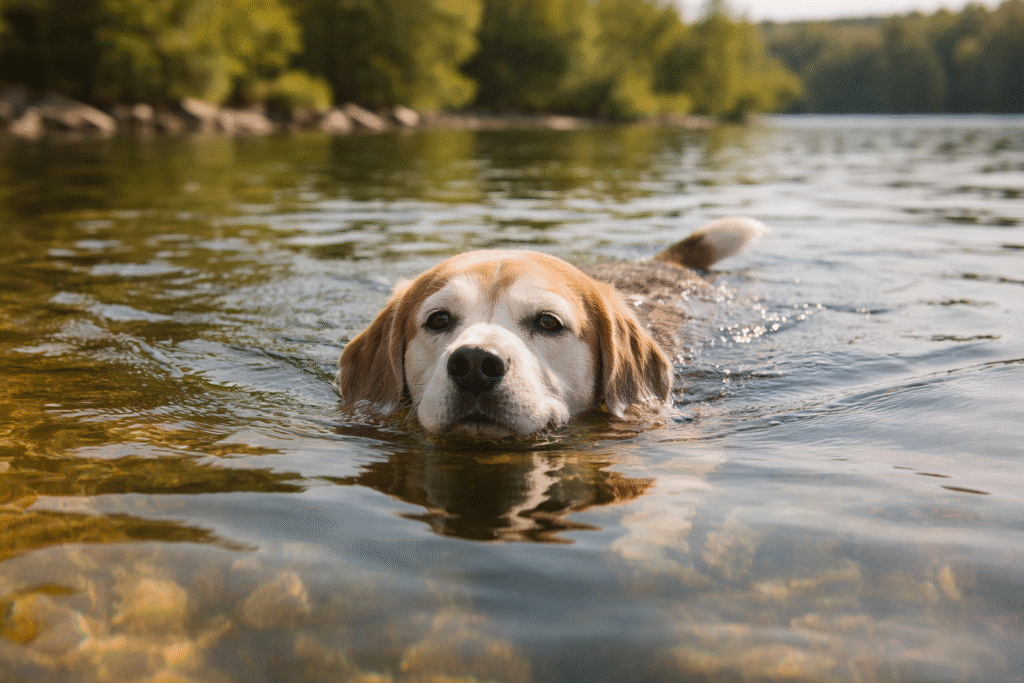
Just because your dog has a little gray around the muzzle doesn’t mean they’re ready to hang up their leash. Senior dogs still need exercise—and in many ways, it becomes more important as they age. The right kind of movement helps maintain muscle, supports joint health, keeps weight in check, and gives older dogs a mental boost that makes everyday life more enjoyable.
As veterinarian Desi Kelleher, DVM, explains, exercise isn’t just about physical health: it keeps senior dogs mentally engaged, emotionally happier, and connected to the world around them. And let’s be honest—those shared walks and play sessions are just as good for us as they are for them.
🧠 Quick Take:
Senior dogs still need regular exercise—just in smarter, gentler ways. The right activities help maintain muscle, protect joints, manage weight, and keep older dogs mentally happy.
Why It Matters:
Staying active can slow mobility loss, reduce arthritis stiffness, support heart health, and improve overall quality of life as dogs age.
Regular, appropriate exercise plays a huge role in helping senior dogs stay comfortable and independent.
Weight management: Keeping extra pounds off reduces stress on aging joints and lowers the risk of obesity-related conditions like diabetes. The American Veterinary Medical Association notes that many dogs are diagnosed with diabetes between ages 7 and 10, making senior-year activity especially important.
Joint health and mobility: Gentle movement keeps joints lubricated and muscles engaged. As Sylvalyn Simpson, DVM, puts it, “A body in motion tends to stay in motion”—and that applies to dogs, too.
Cardiovascular support: Even low-impact exercise helps maintain heart health and circulation.
Mental well-being: Exercise gives older dogs purpose, routine, and enrichment—especially important as they become less naturally curious or energetic.
Before starting or changing your senior dog’s exercise routine, it’s always smart to check in with your vet. Once you have the green light, these ideas can help you keep your older pup moving safely and happily.
| Activity Type | Why It Helps | Senior-Safe Tips |
|---|---|---|
| 🚶 Gentle Walks | Maintains muscle tone and joint mobility | Short, slow walks; let your dog set the pace |
| 🏊 Swimming | Full-body workout with zero joint impact | Use a life jacket and supervise closely |
| 🦴 Strength Moves | Builds stability and rear-leg strength | Use low platforms; keep sessions brief |
| 🧠 Mental Games | Boosts cognitive health and engagement | Hide treats or use food puzzles indoors |
| 🎾 Gentle Play | Encourages movement and bonding | Keep toys low; avoid jumping or sharp turns |
💡 Rule of thumb: short, frequent exercise sessions are safer and more effective than one long workout for senior dogs.
It sounds obvious, but walking is one of the best things you can do for an older dog. The American Veterinary Medical Association praises walking as a safe way to preserve muscle tone and joint movement without excessive strain.
The key is pacing. Let your dog set the speed and distance, especially in warm weather. Start with a relaxed 10–15 minute stroll and adjust from there. If your dog seems comfortable, you can add mild hills or varied terrain—but a slow loop around the block absolutely counts.
Senior dogs often lose strength in their back legs first. A simple “rear-end awareness” exercise can help rebuild stability and balance. The American Kennel Club recommends placing your dog’s front feet on a low, sturdy platform (like a step or non-slip stool) while the back feet remain on the ground.
Stand in front of your dog and calmly feed treats for 10 seconds, working up to 30. This gently shifts weight to the hind legs and engages important support muscles—without high impact.
If you already own a treadmill, it can be a useful tool for controlled, weather-proof exercise. Start slow: let your dog explore the treadmill while it’s turned off, rewarding calm behavior. When ready, use the lowest speed and never leash your dog to the machine.
This works best for dogs who already enjoy walking and need consistency—especially during icy winters or hot summers.
Swimming is one of the best full-body workouts for senior dogs because it builds muscle without stressing joints. Dr. Simpson recommends it as a low-impact option that also avoids overheating.
Not all dogs are natural swimmers, so a well-fitted life jacket is essential. Calm lakes, pools, or canine rehab centers offering hydrotherapy are ideal—and always stay within arm’s reach.
A rehab-trained veterinarian or canine physical therapist can create a custom exercise plan that supports mobility while managing pain. Therapies may include massage, stretching, underwater treadmills, acupuncture, or targeted strengthening exercises.
The American Association of Rehabilitation Veterinarians is a great place to find qualified professionals near you.
Mental exercise matters just as much as physical movement. Activities that tap into foraging instincts—like hiding treats or toys around the house—keep senior dogs mentally sharp. Food puzzles, stuffed Kongs, and scent games are all excellent low-impact options.
Fetch and playtime are still great—but avoid activities that require jumping or sharp turns. Toss toys along the ground instead of into the air to reduce stress on hips and knees. Your dog still gets to run, retrieve, and feel like a puppy again—just without the joint strain.
Tug-of-war can be a surprisingly good full-body workout when kept calm and controlled. Let your dog lead the intensity, keep sessions short, and stop if they seem tired. It’s also a great bonding activity that keeps older dogs engaged.
Joint discomfort can limit how active a senior dog feels. Dr. Kelleher recommends talking with your vet about supplements like glucosamine, chondroitin sulfate, omega-3 fatty acids, or green-lipped mussel (GLM). These can support joint health and make movement more comfortable.
Senior dogs don’t need marathon workouts. Short, frequent sessions are usually safer and more effective than one long outing. A few brief walks or play sessions spread throughout the day help maintain mobility without overdoing it. What’s “right” will always depend on your individual dog—so pay attention and adjust as needed.
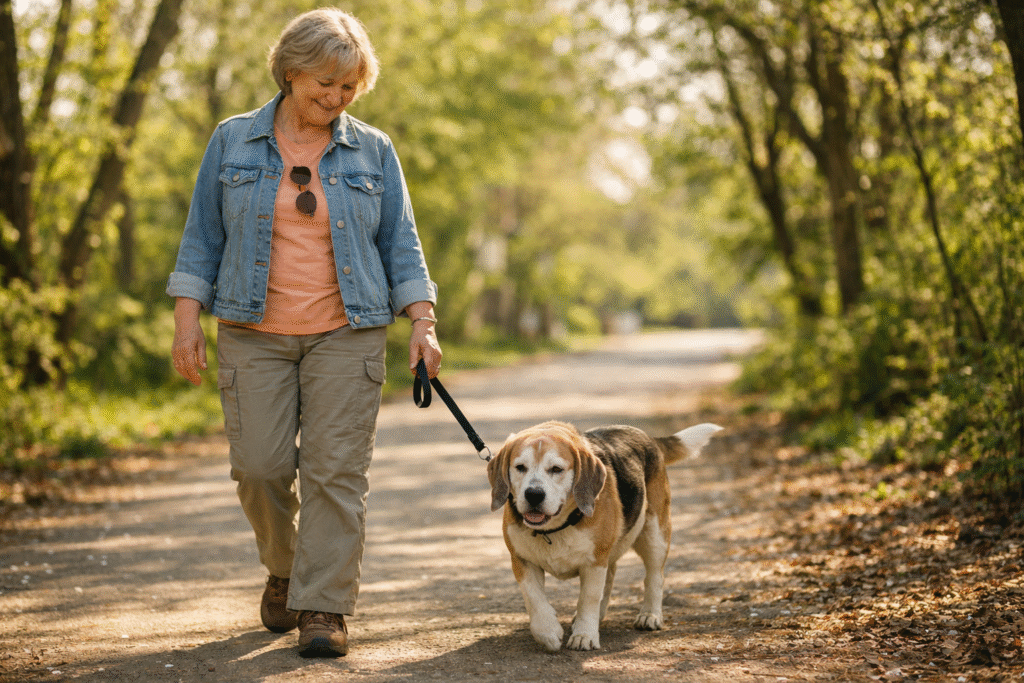
Some days, your senior dog is ready to trot down the sidewalk like nothing’s changed. Other days? Getting off the couch feels like an Olympic event. That’s normal. Arthritis and joint stiffness often fluctuate, which means your dog’s exercise routine should, too.
On tougher days, the goal isn’t fitness—it’s gentle movement that prevents stiffness without causing pain.
On low-mobility days, try:
Extra-short walks (5–10 minutes) on flat ground instead of your usual route
Warm-up time indoors before heading out, especially in cold weather
Swimming or hydrotherapy if available—it supports the body while reducing joint pressure
Light stretching or guided movement recommended by your vet or canine physical therapist
Mental enrichment like food puzzles, scent games, or hide-and-seek to burn energy without impact
You can also help your dog feel more comfortable before and after activity by using joint supplements, vet-approved pain management plans, and supportive gear like orthopedic beds or non-slip mats at home.
Remember: consistency matters more than intensity. Even small amounts of movement can help keep joints from stiffening up completely.
Senior dogs don’t always wave a red flag when they’ve had enough, so it’s important to watch for subtle cues that it’s time to slow down—or stop altogether.
Pause or end exercise if you notice:
Limping, favoring a leg, or sudden stiffness
Slowing dramatically or refusing to move forward
Excessive panting, drooling, or signs of overheating
Lying down mid-activity or repeatedly sitting during walks
Whining, snapping, or unusual irritability during movement
If your dog seems sore or stiff after exercise—especially the next day—that’s a sign the session was too much. Scale back the time, distance, or intensity next time.
And if you notice persistent pain, worsening mobility, or sudden changes, it’s time to check in with your vet. Adjusting your dog’s exercise plan early can prevent small discomforts from turning into bigger problems.
Exercising a senior dog isn’t about sticking to a rigid routine or hitting some imaginary fitness goal—it’s about helping your dog stay comfortable, confident, and engaged in everyday life. The right kind of movement can slow physical decline, ease stiffness, support mental health, and give your dog more good days to enjoy the things they love most.
The most important rule? Listen to your dog. Their pace, energy level, and body language will always tell you more than a checklist ever could. Some days will call for a leisurely stroll and a sniff-heavy walk around the block. Other days might be better suited for a quick game, a few strength-building moves, or mental enrichment from the comfort of home—and that’s okay.
Aging doesn’t mean giving up on exercise. It just means being more thoughtful, flexible, and compassionate about how you approach it. When you meet your senior dog where they are, you’re not just helping them stay active—you’re helping them feel understood, supported, and loved through every stage of their golden years. 🐾